
Audience situations
Why the person is searching and what changes the answer.
Build meaning before publishing volume
Semantic SEO starts with your goals and a complete understanding of the business. We build the strategy after studying search demand, entities, relationships and the way your market is interpreted — not from an old checklist.
Topical maps, content briefs, entity relationships and internal links organized as one semantic content network.
Semantic SEO Services built around the complete decision
Start with the business model and audience Map topics through entities and relationships Build content briefs that protect context across the networkSemantic SEO, properly defined
Many agencies call a list of topics a topical map. A real semantic strategy has to account for the business, the audience, search demand, page roles, entities, attributes, contextual relationships and the internal paths that hold the network together.
Search systems do not interpret every page in isolation. They evaluate patterns across passages, topics, source relationships and the wider website. That makes consistency and information architecture just as important as individual pieces of content.
We translate those principles into practical maps, briefs and implementation guidance. The goal is a content network that is easier for people to navigate, easier for search engines to interpret and closer to the commercial purpose of the brand.
A real topical network
A semantic strategy starts at the center — the business, audience and subject — then assigns a clear role to every supporting page and relationship.
Explore the deliverablesWhy the person is searching and what changes the answer.
The people, things, places and concepts central to the subject.
Properties that make an entity specific and useful.
How entities, pages and evidence connect across the network.
Which URL owns each question, decision or supporting explanation.
How users and crawlers move through related information.
Semantic SEO Services scope
Each deliverable has a defined role in the wider semantic system and can be commissioned alone or as part of full implementation.
 01
01
Organize nodes around search demand, business priorities, audience situations, SERP patterns and the relationships between topics.
 02
02
Define contextual headings, questions, entities, internal links and source expectations before writing begins.
 03
03
Evaluate how pages work together and identify index bloat, dead weight, broken relationships and conflicting page roles.
 04
04
Clarify the entities, properties and relationships the website must communicate consistently across templates and content.
 05
05
Connect pages according to context, hierarchy and the next useful information need instead of using repetitive link blocks.
 06
06
Track briefs, content, implementation, validation and performance so the network grows in a controlled sequence.
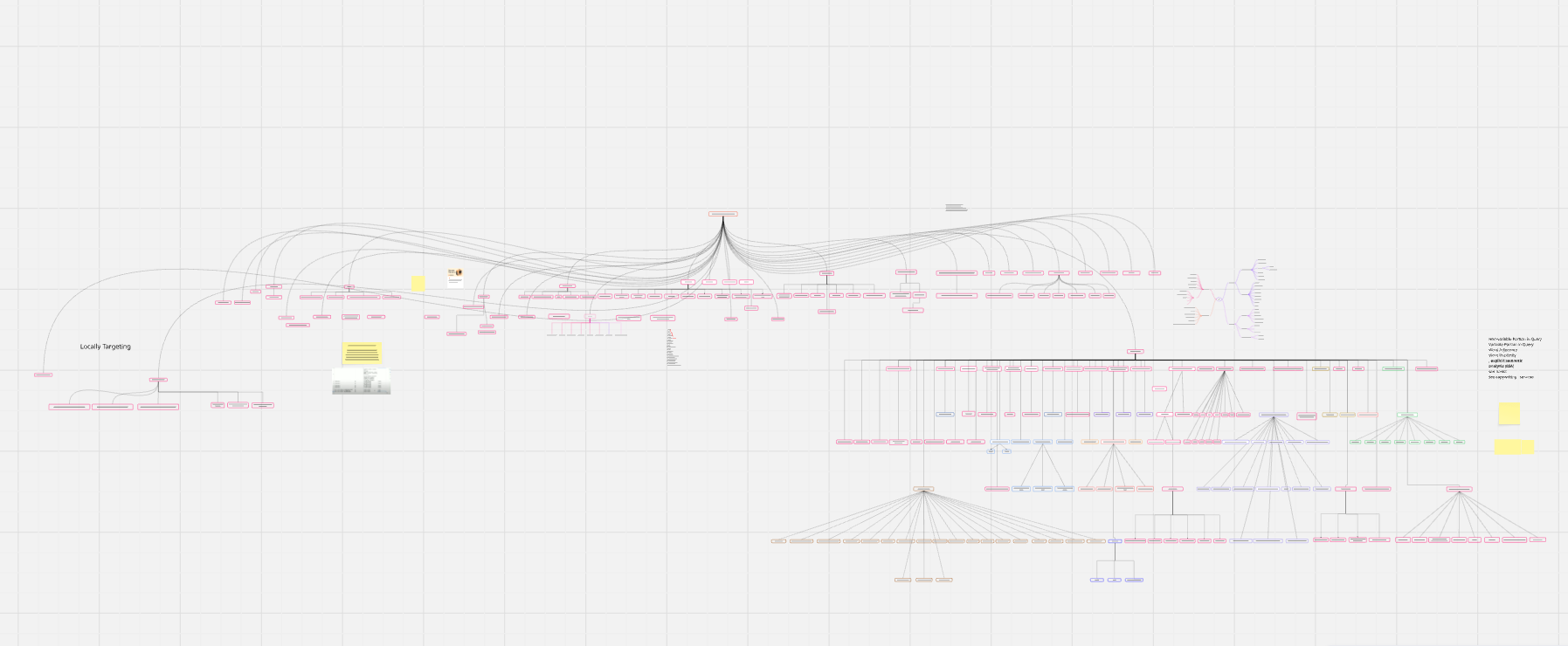
Planning visible to the team
The map is translated into clear page roles, briefs, internal relationships and a publishing sequence. Writers can see what each page owns, editors can protect context and developers can understand the architecture.
Progress is tracked through the CRM so research, writing, implementation and validation remain connected instead of disappearing across separate documents.
Discuss your current setupHow the work moves
Semantic work is sequenced so every new page strengthens a defined part of the system.
Clarify products, services, customer situations, commercial priorities and the language used in the market.
Review query patterns, competitors, source types, entities and the information search systems consistently surface.
Assign page roles, entity coverage, hierarchy and internal relationships before production begins.
Give writers and editors contextual structures, evidence requirements and connection guidance.
Implement in sequence, validate the network and use performance evidence to deepen weak areas.
Client perspective
The best SEO partnership makes the next decision easier and keeps strategy close to implementation.
“We trusted Muhammad Saad with our SEO, and the growth spoke for itself.”
“The strategy was practical, focused and easier for our team to act on. We always knew what was being improved and why.”
Semantic SEO Services FAQ
The right scope depends on the market, website, current visibility and the team available to implement the recommendations.
Ask about your websiteSemantic SEO is the practice of making the meaning and relationships within a website clearer. It connects search intent, entities, attributes, topics, page roles, content structure and internal links so the site answers related information needs as a coherent network.
A topical map is a structured model of the pages, entities, questions and relationships a website needs to cover a subject in a useful and strategically relevant way. It is not simply a keyword export or a list of article titles.
A semantic brief can define the page role, audience situation, contextual heading structure, entities and attributes, questions, evidence, internal links, source expectations and overlap to avoid. It gives the writer a reasoning framework rather than a keyword-density target.
Yes. Topical maps, individual or grouped content briefs and semantic audits can be scoped separately. They can also be combined with implementation, editing and ongoing measurement when the team needs a complete semantic SEO program.
Keyword research remains useful for understanding language and demand, but semantic SEO places those signals inside a wider model of intent, entities, context and relationships. The strategy focuses on what the website means as a system, not how often a phrase appears on one page.
We review coverage and implementation alongside performance by topic cluster and page role. Relevant query breadth, visibility, internal journeys, index quality and useful conversions help show whether the content network is becoming more complete and effective.
A focused first step
Share the website, market and most important challenge. We will review the context and recommend the most useful next step.
