


 Muhammad Saad

 Summarize in ChatGPT
The Semantic Web is a machine-readable web of linked data. W3C defines the Semantic Web as a framework that lets data be shared and reused across application, enterprise, and community boundaries. The core goal is to extend web architecture from documents to data, so software can process entities, attributes, and relationships with less ambiguity.
The Semantic Web does not replace HTML pages. The Semantic Web adds a data layer. RDF expresses facts as subject-predicate-object triples inside a directed, labeled graph. OWL adds formal semantics for richer knowledge modeling. SPARQL queries graph data across RDF stores or middleware. JSON-LD lets linked data fit modern JSON-based systems and web pages.
What Is the Best Example of the Semantic Web?
The best example of the Semantic Web is Schema.org structured data interpreted by search engines at web scale. Schema.org was founded by Google, Microsoft, Yahoo, and Yandex. Schema.org reports that, as of 2024, more than 45 million web domains use more than 450 billion Schema.org objects. Google states that structured data gives explicit clues about page meaning and helps Google gather information about the web and the world more generally.
Three production examples show why this answer is strong:
- Google Knowledge Graph launched with more than 500 million objects and more than 3.5 billion facts and relationships.
- DBpedia exposes structured data extracted from Wikipedia and has operated as a Semantic Web project since 2007.
- Wikidata is a free, open knowledge base with more than 121 million entities and a SPARQL query service available since 2015.
Schema.org is the clearest answer because Schema.org solves the hardest adoption problem: incentives. Search features gave publishers a reason to add structured data, and that publisher incentive turned Semantic Web concepts into a routine part of modern search.
What Is the History Of Semantic Web?
The History Of Semantic web is from 1989 im Berners-Lee invents the World Wide Web at CERN. I give timeline that shows how the Semantic Web moved from vision to production infrastructure:
- 1989: Tim Berners-Lee invents the World Wide Web at CERN. That web becomes the base platform later extended by Semantic Web standards.
- 1990: Berners-Lee and Robert Cailliau publish the formal WorldWideWeb proposal.
- 1998: Initial versions of RDF and RDF Schema appear, marking the first concrete milestones toward the Semantic Web.
- 2001: Tim Berners-Lee, James Hendler, and Ora Lassila popularize the Semantic Web vision in Scientific American.
- 2004: W3C publishes RDF and OWL recommendations, giving the stack stable core standards.
- 2009–2012: OWL 2 is published in 2009, with a second edition in 2012.
- 2011: Schema.org launches as a shared vocabulary for major search engines.
- 2012: Google launches the Knowledge Graph, and Wikidata goes live as Wikimedia’s structured data project.
- 2013: W3C publishes PROV to standardize provenance exchange on the web.
- 2014: W3C publishes the RDF 1.1 suite.
- 2017: SHACL becomes the W3C standard for validating RDF graphs.
- 2020: JSON-LD 1.1 becomes a W3C Recommendation.
How Is the Semantic Web Related to Web 3.0?
The Semantic Web is one foundation of Web 3.0, but not the same thing as today’s Web3. Recent surveys explicitly distinguish Web 3.0 from Web3 and treat the semantic web as one enabling technology among blockchain, AI, IoT, and immersive web systems. The practical distinction is direct: the Semantic Web adds machine-readable meaning, while Web3 emphasizes decentralized ownership, consensus, and token-based coordination.
In early discourse, Web 3.0 often pointed toward an intelligent or ontology-driven web. In current technical literature, Web 3.0 is broader and more disputed. Semantic technology remains central because decentralized systems still need interoperable data models, identity descriptions, policy metadata, and queryable relationships. Semantic data is one enabling layer, not the whole stack.
What Are the Elements of the Semantic Web Framework?
The elements of the Semantic Web framework are identifiers, graph data, vocabularies, ontologies, serializations, query languages, validation layers, and provenance models. Current deployment is practical. Current deployment is not only theoretical. The framework below condenses the W3C stack plus the shared vocabulary layer used by Schema.org and search engines.
| Component | Main function | Common standard or vocabulary | Practical value |
|---|---|---|---|
| Identifiers | Name entities consistently | URI / IRI | One author, company, or product can be referenced across systems |
| Graph model | Express facts as triples | RDF | Data can be merged and traversed as a graph |
| Schema layer | Define classes and properties | RDFS | Shared data modeling vocabulary |
| Ontology layer | Add formal semantics and inference | OWL | Consistency checking and richer reasoning |
| Lightweight vocabulary layer | Standardize common web entities | Schema.org, SKOS | Search markup, taxonomies, controlled vocabularies |
| Serialization layer | Embed or exchange graph data | JSON-LD, RDFa, Microdata, Turtle | Page markup, APIs, export formats |
| Query layer | Retrieve graph data | SPARQL | Cross-source graph querying |
| Validation layer | Check graph quality | SHACL | Required fields, cardinality, type constraints |
| Provenance layer | Record source and process history | PROV | Trust, audit, lineage, accountability |
What Are Semantic Web Uses?
Semantic Web uses are search, knowledge graphs, data integration, open data, enterprise interoperability, and domain-specific reasoning. Research surveys place semantic technologies inside search engines, data integration, enterprise settings, and machine learning. W3C case studies also document production deployments rather than only prototypes.
| Use | Example | Main value |
|---|---|---|
| Search and discovery | Schema.org plus Google Search | Better page understanding and richer result formats |
| Knowledge graphs | Google Knowledge Graph, Wikidata, DBpedia | Entity relationships and factual retrieval |
| Data integration | RDF plus SPARQL federation | Merges heterogeneous databases and APIs |
| Enterprise information management | Shared vocabularies across teams and systems | Reduces silo mismatch and duplicate modeling |
| Science and healthcare | Life-science queries and formal ontologies | Cross-dataset analysis and reusable terminology |
| Open and public data | 5-star linked data publishing | Reusable datasets across agencies and communities |
What Are the Semantic Web Limitations and Criticisms?
Semantic Web limitations and criticisms are real engineering constraints, not abstract objections. The recurring issues are alignment cost, ambiguous semantics, trust, privacy, incentives, and dependence on high-quality structured data. Two major review papers still describe the Semantic Web as simultaneously successful, incomplete, and contested after more than two decades.
Why Can Combining Data Become Difficult?
Combining data becomes difficult because schema difference is only half of the problem. W3C states that RDF facilitates data merging even when underlying schemas differ. The harder work is choosing shared identifiers, linking equivalent entities, mapping vocabularies, and tracing provenance when two sources disagree. SPARQL federation helps query across sources, but integration still depends on modeling discipline and source quality.
Why Do Vagueness and Misunderstandings Limit the Semantic Web?
Vagueness and misunderstandings limit the Semantic Web because domains rarely have a single global interpretation. Critique literature notes that terms such as fruit, planet, and person can carry conflicting semantics across communities. Ontologies reduce ambiguity inside a domain, but world-scale agreement remains expensive and partial. Lightweight vocabularies such as Schema.org work because the target is useful agreement, not perfect agreement.
Why Is Trust a Semantic Web Problem?
Trust is a Semantic Web problem because a triple is not automatically a verified fact. Knowledge-graph research notes that Semantic Web facts often need to be treated as claims until source reliability and provenance are checked. W3C PROV exists to record the entities, activities, and people involved in producing data so quality and trustworthiness can be assessed. Trust improves when provenance, validation, and source reputation travel with the data.
Is the Semantic Web Generally Feasible at Web Scale?
The Semantic Web is generally feasible at web scale only in part because focused Semantic Web systems work, while the full 2001 autonomous-agent vision remains only partly realized. In The Semantic Web: Two Decades On, the majority of respondents judged the original vision mostly or completely unrealized. The same study found that responses on feasibility leaned toward mostly feasible, and 76 respondents expected Semantic Web technologies to play a significant or key future role on the web. The practical reading is cautious optimism, not universal deployment.
Why Does Data Privacy Matter to the Semantic Web?
Data privacy matters to the Semantic Web because linked data makes relationships easier to discover, reuse, and combine. Privacy and knowledge-graph research frames privacy and transparency as opposing controls over information: transparency favors disclosure for oversight, while privacy restricts access to information related to an agent. Linked data can improve policy reasoning and access control, but linked data can also increase re-identification risk when separate datasets are joined. Privacy, provenance, and access rules therefore belong inside the architecture, not outside it.
Why Does Dependency on Structured Data Limit the Semantic Web?
Dependency on structured data limits the Semantic Web because machines can only exploit meaning that publishers expose accurately or extract reliably. Critique literature notes that the Semantic Web depends heavily on reliable publishers and that bad or deceptive structured content can produce brittle inference chains. Google likewise requires structured data to represent visible page content and warns that misleading markup can remove rich-result eligibility. A Semantic Web ecosystem grows when structured data is accurate, visible, and maintained.
What Is the Difference Between the Semantic Web and Semantic Search?
The difference between the Semantic Web and semantic search is publishing meaning versus retrieving meaning. W3C defines the Semantic Web as a framework for sharable data. Google Cloud describes semantic search as retrieval that uses NLP and machine learning to understand natural-language intent and contextual meaning. Modern systems often combine both approaches.
| Dimension | Semantic Web | Semantic search |
|---|---|---|
| Core question | What does this data mean? | Which result best matches this intent? |
| Main input | Explicit metadata, triples, vocabularies | Queries, documents, embeddings, behavioral signals |
| Meaning source | Publisher-defined semantics | Model-inferred semantics |
| Main technologies | RDF, RDFS, OWL, Schema.org, JSON-LD, SPARQL | NLP, embeddings, vector search, hybrid ranking |
| Main strength | Interoperability and explicit structure | Relevance and intent matching |
| Main weakness | Depends on structured markup quality | Can infer the wrong meaning from text |
| Common example | Schema.org, Wikidata, DBpedia | Modern enterprise or web search systems |
What Is the Future of the Semantic Web?
The future of the Semantic Web is integration with knowledge graphs, AI grounding, validation, and decentralized data governance. Recent surveys connect Semantic Web foundations to modern knowledge-graph and Web 3.0 stacks. Current W3C work on RDF 1.2, SPARQL 1.2, and SHACL 1.2 shows that the standards still evolve around querying, graph description, and validation.
The next phase looks narrower and stronger than the 2001 dream. The strongest growth areas are likely to be enterprise knowledge graphs, search features, interoperable metadata, provenance-aware AI systems, and user-controlled linked data. A practical reading is that the Semantic Web is not becoming a separate parallel web. The Semantic Web is becoming a better data layer underneath the existing web.
What Is the Semantic Web Diagram?
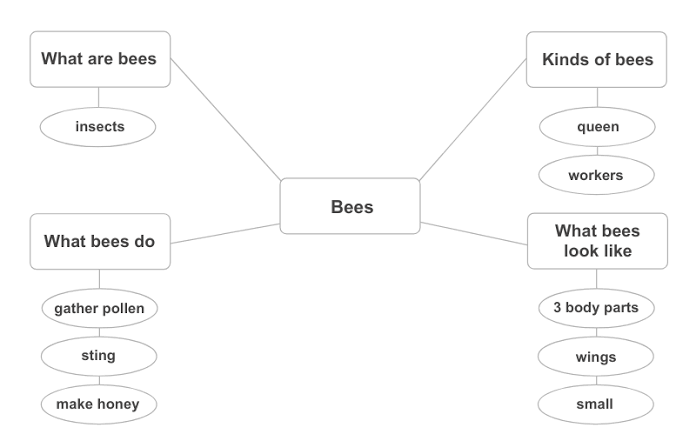
The Semantic Web diagram is the layer cake, also called the Semantic Web stack. W3C design notes describe the Semantic Web as an abstract space of interoperable data for machine processing, and W3C Wiki notes that the exact order and status of layers are not universally agreed. A modern simplified stack looks like this.
- URI / IRI, Unicode, HTTP
- JSON-LD, Turtle, RDFa, Microdata, other serializations
- RDF graph model
- RDFS, SKOS, Schema.org vocabularies
- OWL ontologies
- SPARQL querying and SHACL validation
- PROV provenance
- Rules, proof, trust, and signatures
See the semantic web diagram below:
What Is a Semantic Web Ontology?
A Semantic Web ontology is a formal domain model with classes, properties, and logical constraints. W3C defines OWL as a language for representing rich and complex knowledge about things, groups of things, and relations between things. OWL 2 ontologies provide classes, properties, individuals, and data values, and software can use that formal meaning to check consistency or derive implicit facts.
A taxonomy only organizes labels. An ontology also defines relations and constraints. In a university ontology, Student and Course are classes, enrolledIn is a property, GraduateStudent can be a subclass of Student, and further restrictions can constrain valid values. SKOS is useful for lighter controlled vocabularies. OWL is useful when formal semantics and inference matter.