


 Muhammad Saad

 Summarize in ChatGPT
Local citations are mention’s of your business Name, address and phone number(NAP) on local business listing website. These local listing increase your presence online and a signal to search engine crawler that you are legitimate business. On business directory websites, if your business is listed like angi, yelp that is structured local citation, and if your business is mentioned on website in paragraph or maybe another format that means its unstructured local citation. Rather then only business listing website we also have social platform, or apps, to list your business.
If your business is listed in most famous or a lot of business listing website’s like Google, Yelp, Apple Maps, and Foursquare. Google rank you more in local search results. Your customer easily discover you.
In this article, completely I cover all about local citation. Why they matter?, according to your business what citation you need, how to build and how to get, how to manage and optimize local listings, free business listing website’s, & how much time it takes, how its works for multiple locations & last if you want an expert Uppleadseo offers best local listing services.
What is a Local Citation?
A local citation is any online mention of a business that helps search engines identify who the business is, where it operates, and how customers can contact it. In local SEO, the core citation data is usually the business’s NAP information: Name, Address, and Phone number although strong citations can also include the website URL, business category, opening hours, service area, description, and other entity attributes.
Think of citations as corroborating signals for a local business entity. When Google finds the same business information across authoritative directories, industry platforms, mapping databases, chambers of commerce, and other trusted sources, those references can reinforce its confidence that the business exists and that its location data is accurate.
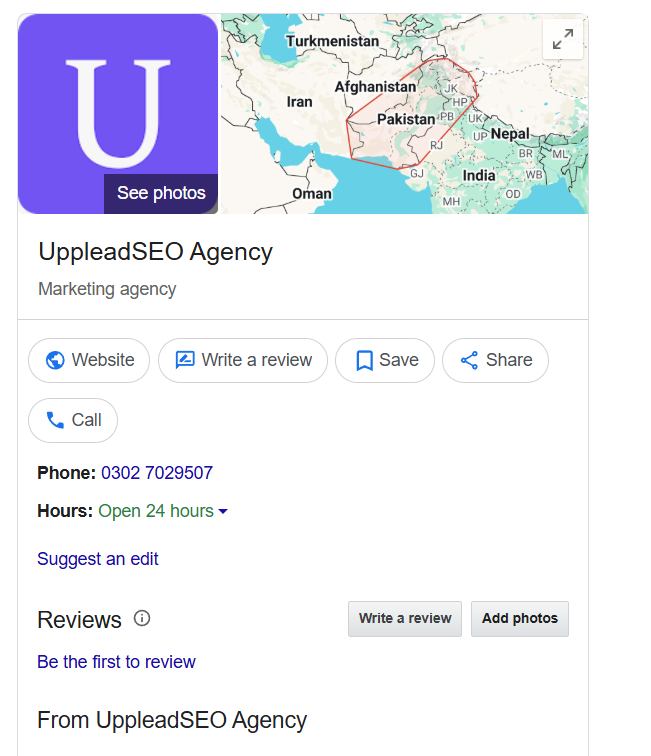
For example, if a plumbing company is listed on its Google Business Profile, Yelp, Bing Places, Apple Maps, a local chamber directory, and reputable trade directories with matching business details, any of those listings can function as a local citation.
What are the Types of local citations?
The types of local citations are structure and unstructured citations. That’s the most people write, but a lot of more types they missing. these two types of data structure, here more are:
- By authority tier: Tier 1 , Tier 2, Tier 3
- By linkage: Linked citations, Unlinked citations
- By source/acquisition method: Aggregator-fed citations, Direct/manually-submitted citations, Earned/editorial citations
- By vertical relevance: Niche/industry citations, Geo-specific citations.
- By platform type: Social citations, Data/voice citations.
What are structured citations?
Structured citations are online business listings where a company’s key information is displayed in standardized, predefined fields such as:
Business Name + Address + Phone Number (NAP), along with the website URL, business category, opening hours, service areas, and other profile data.
They commonly appear on platforms such as Google Business Profile, Bing Places, Apple Business Connect, Yelp, Facebook, Yellow Pages, and industry-specific directories.
The word “structured” isn’t decorative here. it’s the operative distinction from a machine-parsing standpoint.
On a structured platform, the algorithm doesn’t have to infer which token in a sentence is the phone number versus the suite number; the schema already tells it.
That’s a fundamentally more reliable data source than unstructured mentions, which is why structured citations get audited first and weighted more heavily in most citation-cleanup workflows.
What are Unstructured citations?
Unstructured citations are online mentions of a local business that appear naturally within website content rather than inside fixed directory fields.
It is a contextual, non-standardized mention of a business’s core identifying data (NAP / NAPW) embedded within free-form body copy, editorial content, or unstructured text across the web.
They may include the business’s name, address, phone number, website URL, location, or brand mention.
Common examples include local news articles, blog posts, press releases, sponsorship pages, event pages, chamber of commerce content, community websites, local guides, and industry publications.
What are the Benefits of local citations for local businesses?
The benefits of local citations for local business are Help Search Engines Verify Business Information, Prominence and entity corroboration, Consumer trust and referral conversion, Build Industry and Topical Relevance, Semantic Co-Occurrence & Vector Mapping, Increase Customer Discovery, Generate Referral Traffic and Leads, Protect Consumer Trust.
Help Search Engines Verify Business Information:
One of the core benefits of citations is entity corroboration.
When a business’s Name, Address, Phone Number (NAP), website, category, and location data appear across trusted sources, search engines have additional references they can use to understand which online mentions belong to the same real-world entity.
This is particularly important where businesses have:
- Changed addresses
- Changed phone numbers
- Rebranded
- Opened multiple locations
- Created separate practitioner listings
- Accumulated duplicate directory profiles
Prominence and entity corroboration
Whitespark’s 2026 Local Search Ranking Factors survey has 47 local search experts scoring 187 individual factors for their impact on local pack/Maps rankings, local organic rankings, and new this edition AI Search visibility.
Consistency of your NAP across the primary map engines (Google, Bing, Apple) lands at rank 28 out of 187 ahead of a huge share of on-page and link factors. That’s the empirical version of “prominence,” not a hand-wave.
Consumer trust and referral conversion
Local citations directly affect consumer conversion metrics before a customer ever reaches your site:
-
Trust Loss Metric: 62% to 78% of consumers state they will completely avoid or lose trust in a local business if they encounter incorrect NAP data (wrong phone number, old address, or incorrect operating hours) during an online search.
-
In-Person Visit Rate: Google’s internal retail studies show that businesses with 100% complete and verified structured citations are 70% more likely to attract in-person location visits compared to unverified profiles.
-
Data Friction in the Wild: SEMrush and Whitespark data reveal that 68% of active local businesses currently have at least one inaccurate or duplicate listing active on the web, causing silent lead leakage to competitors.
Build Industry and Topical Relevance
Niche citations strengthen what a business does as well as where it operates.
A lawyer listed on recognized legal platforms, a dentist appearing in healthcare directories, or a contractor referenced by construction associations creates stronger category and topical alignment.
The strongest citation opportunities combine three qualities:
Authority + Industry Relevance + Geographic Relevance
Whitespark’s 2026 research is particularly interesting here. Among the factors local search experts associated with AI search visibility, prominence on industry-relevant domains ranked #3, while the quality and authority of unstructured citations ranked #4. Citations from industry-relevant and locally relevant domains also appeared within its wider AI visibility factor list.
Semantic Co-Occurrence & Vector Mapping
Unstructured citations embedded in local news features, community sponsorships, or editorial roundups surround your brand with natural localized terminology (e.g., “emergency 24/7 plumber in downtown Chicago”).
This trains search engine Natural Language Processing (NLP) models to assign high topical salience to your entity for specific service terms.
Increase Customer Discovery
Citation platforms are not used only by search engines.
Consumers use Google Maps, Yelp, directories, review platforms, industry websites, social networks, and navigation services to research businesses.
BrightLocal’s 2023 Local Business Discovery and Trust study found that 61% of consumers used business information sites to discover new local businesses. Google was the most trusted platform for researching local businesses at 66%, followed by Google Maps at 45%.
Generate Referral Traffic and Leads
Afcors when you have listings on multiple platforms. The consumers that use those platforms will redirect to your website and most of us convert into leads.
Protect Consumer Trust
When customer see that this business appear consistently on a lot of platform they develop trust in their mind and thing these are not scammers.
The benefits also define why citations matters. but a small question arise that, does citations are like link building? no, those are citations to your local business sometimes with links or without links. and these are not any website. These are on business listing local directories. You can say kind off it’s linking or referring but purely link building is not correct.
How to build local citations?
To build local citations first audit your existing citations, then prepare document that have all your business details like phone number, address, then go and find local directories and submit your business(Claim and verify Tier 1 profiles first), then build 2/3 tire general directories, after Build Industry-Specific Citations, also Analyze Competitors’ Citation Profiles, track and monitor every citation.
Audit Existing Citations
Do not immediately begin submitting listings.
First perform a citation audit.
Search for existing versions of the business using combinations of:
- Business name
- Address
- Phone number
- Previous phone numbers
- Previous addresses
- Old business names
- Domain name
The audit should classify citations as:
Correct – no action required.
Incorrect – information needs modification.
Duplicate – multiple listings represent the same location.
Incomplete – important fields are missing.
Missing – competitors are present but the business is not.
This step prevents the common mistake of creating a new listing when one already exists.
Prepare document that have all your business details
Before submitting a business anywhere, establish a single source of truth for its business data.
This becomes the master record used when creating and correcting listings.
Record the following information:
- Official business name
- Street address
- Suite/unit number
- Primary local phone number
- Website URL
- Location-page URL for multi-location businesses
- Primary business category
- Secondary categories
- Opening hours
- Business description
- Services and products
- Service areas
- Business email
- Logo
- Photos
- Social profiles
- Year established
- Accepted payment methods
- Accessibility information
For multi-location organizations, maintain a separate record for every location.
Submit your business
Once the data is clean, begin submitting with the platforms that have the greatest authority, reach, consumer visibility.
Examples include:
- Google Business Profile
- Apple Business Connect
- Bing Places
- Yelp
- Major national business directories
- Major mapping and navigation platforms
- Relevant review platforms
Which platforms matter most will vary by country, industry and business model.
Whitespark identifies Google Business Profile as the most important structured citation and recommends building accurate listings on prominent citation sources before expanding into smaller opportunities.
Build out Tier 2/3 general directories selectively
Now build for tier 2/3 like Yelp, BBB, Yellow Pages, MerchantCircle, Manta, and your local Chamber of Commerce are worth claiming. But don’t chase every directory that exists. Quality and authority score higher than raw volume in how these signals actually get weighted, so prioritize domains with real traffic over your count with low-value directories.
Build Industry-Specific Citations
After the foundational listings are established, move into vertical citation building.
These citations appear on websites dedicated to the business’s industry or profession.
For example:
- Law firms: legal directories and bar associations
- Dentists: dental and healthcare directories
- Hotels: travel and accommodation platforms
- Contractors: construction and home-service directories
- Accountants: financial and professional associations
- Restaurants: food and hospitality platforms
Industry citations can provide stronger topical entity relevance because the surrounding website already has a clear relationship with the business category.
This is one reason citation authority should not be judged purely by domain metrics.
A highly relevant trade association may be substantially more meaningful than a generic directory with a larger SEO metric.
Analyze Competitors’ Citation Profiles
Citation gap analysis is one of the fastest ways to find relevant opportunities.
Identify several businesses ranking strongly for your target queries and investigate where they are mentioned.
Search for combinations such as:
"Competitor Business Name" "Phone Number"
"Competitor Name" "City"
"Competitor Address"
You can then identify directories, associations, sponsorships, local articles and industry platforms where competitors have citations but your business does not.
Monitor and Update
Citation building is not a one-time project. You need to regularly monitor and update. Business data changes.
Common triggers for a new citation audit include:
- Business relocation
- New telephone number
- Rebranding
- New website
- Acquisition or merger
- Location closure
- New opening hours
- Multi-location expansion
How to track & optimize local citations
To track and optimize local citations, you need to do it regularly audit their NAP data, monitor duplicate and inaccurate listings, Footprint Tracking via Google Search Operators.
The process should focus first on data accuracy and consistency, then on improving citation quality, relevance, completeness, and authority.
You have 2 methods manual or automated. You can use to automated tools for monitoring. But enhance you need to do it manually. Tools tells you here you are inconsistent data. In market we have a lot of tools that measure. Now I explain every point in details.
Audit your existing citations regularly
Run a complete citation audit before trying to optimize individual listings. When building citation make sure build a sheet record. Then using separators or multiple methods audit existing one. Information is missing or in consistent fix it.
Monitor duplicate and inaccurate listings
Remove duplicates and Monitor all inaccurate listing and fix them Asap!.
For example:
125 Main Street
and:
125 Main St.
normally refer to the same underlying address.
A more serious problem would be:
125 Main Street
versus:
425 Main Street
Likewise, different formatting of the same telephone number is less important than having an entirely outdated number.
Footprint Tracking via Google Search Operators
Automated tools often miss unstructured citations or unindexed directory pages. Conduct manual footprint searches using Boolean search parameters:
# Find all indexed instances of your phone number excluding your own domain:
“512-555-0199” -site:yourwebsite.com# Find historical/old address references across the web:
“100 Old Main St” “Your Business Name”# Uncover unindexed or orphaned duplicate profiles on specific platforms:
site:yelp.com/biz/ “Your Business Name”
What are the Free local citation sites?
The free local citation sites are Google Business Profile, Apple Business Connect, Bing Places for Business, Yelp, Facebook, Nextdoor, Tripadvisor, Manta, Cylex, ChamberofCommerce.com, Hotfrog, and other reputable local or industry-specific business directories that allow businesses to create or claim a basic listing without paying a listing fee.
| Local Citation Site | Approx. DA* | Free Basic Listing | Citation Type | Best For |
|---|---|---|---|---|
| Google Business Profile | ≈100 | Yes | Core / Maps | Almost every eligible local business |
| Apple Business Connect | ≈99 | Yes | Core / Maps | Apple Maps, Siri, and Apple ecosystem visibility |
| ≈96 | Yes | Social / Structured | Brand presence, NAP, and customer discovery | |
| Bing Places for Business | ≈94 | Yes | Core / Maps | Bing and Microsoft search visibility |
| Yelp | ≈93 | Yes | Directory / Reviews | Local services, restaurants, and consumer businesses |
| Tripadvisor | ≈93 | Yes, for eligible businesses | Niche / Reviews | Hotels, restaurants, attractions, and tourism |
| Nextdoor | ≈89 | Yes | Hyperlocal / Social | Home services and neighborhood businesses |
| Manta | ≈80 | Yes | General Directory | Small and local businesses |
| ChamberofCommerce.com | ≈70 | Basic listing available | Business Directory | U.S. businesses and local business discovery |
| Cylex USA | ≈51–52 | Yes | General Directory | General local business citations |
| Hotfrog | ≈55+ | Basic listing available | General Directory | Small businesses and service companies |
How long does the local citation process take?
The local citation process can take anywhere from a few days to several weeks, depending on the number of listings, verification requirements, and how quickly each directory approves or updates business information.
Core citations may go live quickly, while duplicate removal, data corrections, and manual verification can take longer.
How do local citations work for multiple locations? GMB citations
Local citations work for multiple locations like every business have own google business profile.
For example, a company with branches in Dallas, Austin, and Houston should build and maintain citations separately for each branch:
Dallas GBP → Dallas NAP → Dallas location page → Dallas citations
Austin GBP → Austin NAP → Austin location page → Austin citations
Houston GBP → Houston NAP → Houston location page → Houston citations
Having trouble with local SEO citations?
UpPleadSEO’s local SEO experts can help you build, clean up, and optimize citations to improve business visibility, NAP consistency, and local search performance. See more details: Local SEO Services.